


Dysport Treatment for Wrinkle Reduction in New York, NY
Dysport is a wrinkle reduction treatment that uses a purified botulinum toxin formulation to temporarily relax targeted facial muscles responsible for dynamic wrinkles. Board-certified dermatologist Dr. Naomi Donnelley, MD, FAAD, at Donnelley Dermatology, provides personalized Dysport treatment recommendations focused on achieving balanced and refined aesthetic results. By reducing repeated muscle contractions, Dysport can help soften the appearance of lines between the eyebrows, forehead wrinkles, and other expression-related concerns while maintaining natural-looking facial movement. For more information, contact us or schedule an appointment online. We are conveniently located at 1075 Park Ave , #1C, New York, NY, 10128.
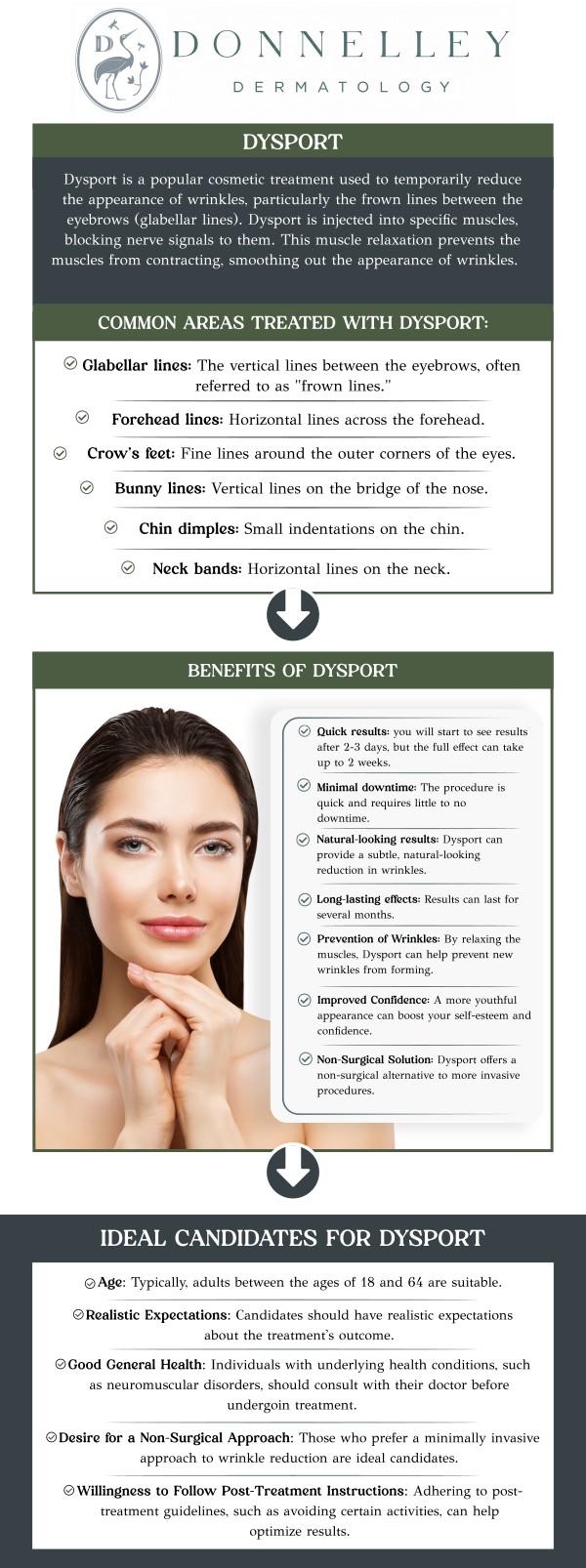
Table of Contents:
How does Dysport treatment help reduce facial wrinkles and fine lines?
What areas of the face can be treated with Dysport injections?
How long do Dysport results typically last after treatment?
What should you expect during and after a Dysport treatment session?
Personalized Dysport Wrinkle Reduction Care With Dr. Naomi Donnelley, MD, FAAD, Yale-Educated Board-Certified Dermatologist at Donnelley Dermatology
Possible Side Effects and Safety Considerations of Dysport
What Are the Common Side Effects of Dysport Injections?
Can Dysport Cause Eyelid Drooping or Facial Asymmetry?
Are There Any Serious Risks Associated With Dysport?
Who Should Avoid Dysport Treatment?
How Can Patients Minimize Dysport Side Effects Before and After Treatment?
How Often Can Dysport Injections Be Repeated Safely?
What Should You Tell Your Dermatologist Before Dysport Treatment?
Medical References
Dysport is an FDA-approved injectable neuromodulator used to temporarily improve the appearance of moderate to severe frown lines between the eyebrows (glabellar lines) in adults younger than 65. It contains botulinum toxin type A, which temporarily reduces muscle contractions responsible for dynamic wrinkles. By relaxing targeted facial muscles, Dysport helps smooth the overlying skin and soften expression lines. Treatment of other facial areas, including forehead lines and crow’s feet, is considered off-label in the United States.
Dysport treatment commonly targets areas such as forehead lines, crow’s feet around the eyes, and frown lines between the eyebrows. At Donnelley Dermatology, Dr. Naomi Donnelley, MD, FAAD uses a personalized approach to determine appropriate treatment areas while focusing on balanced, natural-looking results. The goal is to help improve wrinkle appearance while preserving normal facial movement and expression.
Clients may begin noticing improvements within a few days after treatment, with results typically lasting several months. Regular follow-up treatments may help maintain a smoother, refreshed appearance based on individual aesthetic goals. Dysport offers a minimally invasive option for clients seeking professional wrinkle reduction care tailored to their facial features and skin needs.
Dysport injections are commonly used to treat areas of the face affected by dynamic wrinkles caused by repeated muscle movements. By temporarily relaxing targeted facial muscles, Dysport can help soften the appearance of expression lines while maintaining natural facial movement. Common treatment areas include:
• Forehead lines: Helps reduce the appearance of horizontal lines caused by repeated forehead muscle activity.
• Frown lines between the eyebrows: Targets glabellar lines that appear with expressions such as frowning or concentrating.
• Crow’s feet around the eyes: Helps soften fine lines that develop from smiling, squinting, and other facial expressions.
• Bunny lines on the nose: May help reduce wrinkles that appear when scrunching the nose.
• Other expression-related facial lines: Treatment areas may be customized based on individual facial anatomy and aesthetic goals.
Dysport is FDA-approved for the temporary improvement of moderate to severe glabellar lines in adults younger than 65. Its use for forehead lines, crow’s feet, bunny lines, and other cosmetic facial areas is considered off-label and requires an individualized medical assessment. At Donnelley Dermatology, Dr. Naomi Donnelley, MD, FAAD, evaluates each patient’s facial anatomy and aesthetic concerns to determine appropriate treatment areas while supporting balanced, natural-looking results.
The recommended Dysport treatment areas can vary depending on each client’s needs and desired outcome. Through customized cosmetic dermatology care in New York, NY, Dr. Donnelley helps clients address facial wrinkles while preserving their unique expressions.
Dysport results typically begin to appear within a few days after treatment, with many clients noticing initial improvements around two to three days following injections. The full effects of Dysport may become more noticeable as the treated facial muscles gradually relax, with results commonly reaching their peak within about two weeks.
The duration of Dysport results can vary from person to person, but effects often last approximately three to four months. Factors that may influence how long results last include the treatment area, muscle activity, individual metabolism, and the amount of Dysport used during the procedure.
At Donnelley Dermatology, Dr. Naomi Donnelley, MD, FAAD, creates personalized Dysport treatment plans based on each client’s aesthetic goals and facial characteristics. Regular maintenance treatments may be recommended to help clients continue enjoying a smoother, refreshed appearance over time.
A Dysport treatment session is designed to be a quick and minimally invasive cosmetic procedure. During your appointment, your dermatologist will evaluate your facial muscles, discuss your aesthetic goals, and determine the appropriate injection areas. The treatment process generally includes:
• Consultation and assessment: Your facial anatomy, wrinkle concerns, and desired results are reviewed to create a personalized treatment plan.
• Treatment area preparation: The targeted areas are cleansed, and specific injection points are identified for precise placement.
• Dysport injections: Small amounts of Dysport are carefully injected into selected facial muscles using a fine needle.
• Treatment comfort: Most clients experience minimal discomfort during the procedure, which typically takes only a short amount of time.
• Aftercare guidance: Instructions are provided to support proper healing and help optimize results.
• Gradual results: Improvements may begin within a few days, with fuller results typically appearing as the treated muscles relax.
• Temporary effects: Mild redness, swelling, or sensitivity at injection sites may occur and generally improve shortly after treatment.
• Follow-up care: Maintenance treatments may be discussed based on your individual goals and how your skin responds.
At Donnelley Dermatology, Dr. Naomi Donnelley, MD, FAAD, provides personalized Dysport treatments focused on precise techniques and natural-looking outcomes. Her approach helps clients receive care tailored to their facial features and cosmetic goals in New York, NY.
Personalized Dysport wrinkle reduction care begins with a comprehensive evaluation of facial anatomy, skin concerns, and aesthetic goals. Dr. Naomi Donnelley, MD, FAAD, Yale-Educated Board-Certified Dermatologist, is a highly experienced dermatologist with over 21 years of post-residency experience, specializing in medical, surgical, and cosmetic dermatology. Throughout her distinguished career, she has earned numerous accolades, including recognition as a Top Doctor and being listed in the Top 100 Registry. She uses her extensive dermatologic expertise to create customized Dysport treatment plans designed to address dynamic wrinkles while supporting natural-looking facial expressions.
At Donnelley Dermatology, Dr. Donnelley focuses on precise treatment techniques and individualized care throughout the Dysport experience. Her approach combines advanced cosmetic dermatology knowledge with a detailed understanding of facial balance to help clients achieve refreshed, natural-looking results. Each treatment plan is tailored to the client’s unique features and aesthetic preferences while maintaining a focus on safety, comfort, and personalized wrinkle reduction care in New York, NY.
Dysport® (abobotulinumtoxinA) is an FDA-approved injectable neuromodulator indicated for the temporary improvement in the appearance of moderate to severe frown lines between the eyebrows (glabellar lines) in adults younger than 65. It works by blocking the release of acetylcholine at the neuromuscular junction, temporarily reducing muscle contractions responsible for dynamic facial wrinkles.
Dysport may also be used for other facial areas, including horizontal forehead lines, crow’s feet, and bunny lines. However, these cosmetic applications are considered off-label in the United States. Although Dysport is generally well tolerated when administered by a qualified healthcare professional, patients should understand its potential side effects, contraindications, and safety precautions before undergoing treatment.
Most injection-related side effects are mild and temporary, often improving within several days. However, some adverse reactions may last longer or require medical evaluation.
Commonly reported side effects include:
• Injection-Site Reactions: Temporary redness, swelling, bruising, tenderness, or discomfort may occur around the treated areas.
• Headache: Some patients may experience headaches following Dysport injections. These are generally temporary, although their severity and duration can vary.
• Eyelid Swelling: Mild swelling around the upper eyelids or eyebrows may develop following treatment.
• Nausea: Nausea was reported among patients participating in clinical trials for glabellar line treatment.
• Respiratory Symptoms: Nasopharyngitis, upper respiratory tract infections, and sinusitis were reported during clinical studies. These findings do not necessarily establish that Dysport caused these conditions.
Patients should contact their dermatologist if side effects persist, worsen, or interfere with normal activities.
Dysport works by temporarily reducing muscle activity. Occasionally, its effects may extend to nearby muscles, causing changes in facial appearance or movement.
• Eyelid Drooping (Ptosis): Temporary weakness of muscles responsible for lifting the upper eyelid may cause the eyelid to appear lower than usual. This condition generally improves as the medication’s effects gradually wear off, although recovery may take several weeks or longer. In selected cases, a healthcare professional may prescribe eye drops to provide temporary improvement.
• Eyebrow Asymmetry: Uneven muscle relaxation may cause one eyebrow to appear higher or lower than the other. A follow-up evaluation can help determine whether additional treatment or observation is appropriate.
• Dry Eyes or Eye Irritation: Dysport injections around the glabellar region may affect eyelid function and contribute to dry eyes, irritation, light sensitivity, or changes in tear production. Persistent eye symptoms should be evaluated by a healthcare professional.
Careful patient assessment, appropriate dosing, and accurate injection placement are important for minimizing unwanted effects on surrounding muscles.
Dysport carries an FDA boxed warning regarding the potential spread of botulinum toxin effects beyond the injection site. Although serious systemic complications are uncommon with approved cosmetic use, patients should recognize symptoms that require immediate medical attention.
Possible signs of toxin spread include:
• Generalized muscle weakness or unusual loss of strength.
• Double vision (diplopia), blurred vision, or drooping eyelids.
• Difficulty swallowing (dysphagia).
• Slurred speech or difficulty speaking clearly (dysarthria).
• Changes in voice, including hoarseness.
• Difficulty breathing or respiratory muscle weakness.
These symptoms may develop hours to weeks after an injection. In severe cases, swallowing and breathing complications can become life-threatening.
Patients experiencing difficulty swallowing, speaking, or breathing following Dysport treatment should seek emergency medical attention immediately.
Serious hypersensitivity reactions, including anaphylaxis, have also been reported. Symptoms such as widespread hives, swelling of the face or throat, or breathing difficulties require immediate medical care.
Dysport is not appropriate for everyone. According to FDA prescribing information, certain allergies and active infections are formal contraindications, while other medical conditions require additional precautions.
Contraindications
Patients should not receive Dysport if they have:
• Cow’s Milk Protein Allergy: Dysport may contain trace amounts of cow’s milk protein and is contraindicated in individuals with a known allergy to cow’s milk protein. This allergy is different from lactose intolerance.
• Botulinum Toxin Allergy: A known hypersensitivity to any botulinum toxin product or any component of the Dysport formulation, including human albumin.
• Infection at the Injection Site: An active infection at the proposed injection location. Treatment should be postponed until the infection has resolved and the healthcare professional determines that injection is appropriate.
Medical Warnings and Precautions
Certain health conditions require careful evaluation before Dysport treatment.
• Neuromuscular Disorders: Patients with myasthenia gravis, Lambert-Eaton syndrome, amyotrophic lateral sclerosis (ALS), or other neuromuscular conditions may have an increased risk of excessive muscle weakness, swallowing difficulties, and respiratory complications.
• Swallowing or Breathing Disorders: Individuals with pre-existing swallowing or respiratory problems may be more susceptible to serious complications associated with botulinum toxin effects.
• Pregnancy and Breastfeeding: Adequate human safety data regarding Dysport use during pregnancy and breastfeeding are unavailable. Elective cosmetic treatment is generally deferred during these periods, and patients should discuss their circumstances with their healthcare professional.
Appropriate preparation, careful injection technique, and adherence to individualized aftercare instructions may help reduce avoidable complications.
Before Dysport Treatment
• Inform your dermatologist about all prescription medications, over-the-counter products, vitamins, and supplements.
• Discuss the use of aspirin, nonsteroidal anti-inflammatory drugs (NSAIDs), anticoagulants, and supplements that may increase bruising risk.
• Do not stop prescribed blood-thinning medications without approval from the prescribing healthcare professional.
• Consider avoiding alcohol shortly before treatment if recommended by your dermatologist, as alcohol may contribute to bruising.
• Inform your dermatologist about active infections, skin irritation, inflammation, or open wounds near the planned injection sites.
• Discuss previous reactions to botulinum toxin treatments and any underlying health conditions that may affect treatment safety.
After Dysport Treatment
• Avoid Rubbing or Massaging: Do not rub or apply firm pressure to the injection sites. This precaution helps minimize unintended effects on nearby muscles.
• Follow Positioning Instructions: Patients should follow their dermatologist’s individualized aftercare recommendations. Some providers advise remaining upright for several hours after Dysport treatment, although this is not a specific requirement in the FDA-approved prescribing information.
• Limit Strenuous Physical Activity: The American Academy of Dermatology recommends waiting at least two hours before strenuous exercise. Your dermatologist may recommend a longer interval based on your treatment and individual needs.
• Use Gentle Skin Care: Makeup and gentle facial cleansing are generally permitted after treatment, provided patients avoid rubbing or applying significant pressure to the injection sites.
• Follow Guidance for Other Cosmetic Procedures: Ask your dermatologist when it is appropriate to schedule facials, facial massages, microneedling, or other treatments involving the injected areas.
• Monitor for Unusual Symptoms: Report persistent swelling, significant eyelid drooping, visual changes, worsening eye irritation, or other concerning symptoms promptly.
Most patients can resume their usual daily activities shortly after Dysport injections. However, individual aftercare instructions may vary depending on the treatment area and clinical circumstances.
Dysport may begin producing noticeable improvements within two to three days, although the onset varies among patients. Treatment effects are commonly assessed around two weeks after injection, and results often last approximately three to four months. Some patients may experience benefits for longer.
According to FDA-approved prescribing information, repeat Dysport injections for glabellar lines should not be administered more frequently than once every three months.
As with other therapeutic proteins, botulinum toxin treatments have the potential to stimulate antibody formation. However, neutralizing antibodies were not detected among the 1,554 subjects evaluated for antibodies in the glabellar-line clinical studies described in Dysport’s FDA labeling. Following recommended dosing and treatment intervals supports appropriate use but does not guarantee prevention of antibody development.
At Donnelley Dermatology in New York, NY, patients can receive individualized Dysport consultations focused on facial anatomy, medical history, aesthetic concerns, and treatment goals. A personalized evaluation helps determine treatment suitability, establish realistic expectations, and explain potential side effects and safety considerations before cosmetic injections.
Before receiving Dysport injections, patients should disclose their complete medical history, current medications, previous cosmetic treatments, and known allergies.
Important information to share includes:
• Previous Botulinum Toxin Treatments: Inform your dermatologist about previous Dysport, Botox®, Xeomin®, Daxxify®, Jeuveau®, or other botulinum toxin injections, including the product name and treatment date. This is especially important for injections received within the previous four months.
• Medications Affecting Muscle Function: Certain antibiotics, particularly aminoglycosides, and medications that interfere with neuromuscular transmission may increase the effects of Dysport.
• Muscle Relaxants and Anticholinergic Medications: These medications may increase certain adverse effects when used with Dysport.
• Blood-Thinning Medications: Anticoagulants, antiplatelet medications, and certain over-the-counter pain relievers or supplements may increase the likelihood of bruising.
• Previous Facial Procedures: A history of facial surgery, facial nerve weakness, eyelid drooping, or changes in facial muscle movement may affect treatment planning.
• Underlying Medical Conditions: Patients should disclose neuromuscular disorders, breathing difficulties, swallowing problems, bleeding disorders, and previous reactions to injectable treatments.
Botulinum toxin products have different potency units and are not interchangeable. Their doses should not be directly converted from one product to another.
For more information, contact us or schedule an appointment online. We are conveniently located at 1075 Park Ave , #1C, New York, NY, 10128. We serve clients from New York NY, Bronx NY, Brooklyn NY, Manhattan NY, Harlem NY, and surrounding areas.
FDA: Dysport® Prescribing Information – FDA approval, safety warnings, contraindications, and side effects.
American Academy of Dermatology (AAD): Botulinum Toxin FAQs – Treatment safety, side effects, and aftercare.
Mayo Clinic: Botox Injections – Risks, preparation, and recovery.
Cleveland Clinic: Botulinum Toxin Injections – Safety precautions, side effects, and recovery.

Check Out Our 5 Star Reviews


ADDITIONAL SERVICES YOU MAY NEED
▸ Acne Treatment
▸ Birthmarks
▸ Eczema
▸ Warts
▸ Molluscum Contagiosum
▸ Viral Rashes
▸ Drug-Induced Rashes
▸ Rashes Treatment
▸ Seborrheic Dermatitis
▸ Fungal Infections
▸ Hives
▸ Dysport
▸ Fillers
▸ Fine Lines & Wrinkles
▸ Facial Volume
▸ Microneedling
▸ Fraxel Laser
▸ Intense Pulsed Light (IPL)
▸ Venous Stasis Dermatitis
▸ Pigmentation Treatment
▸ Melasma Treatment
▸ Dark Spots
▸ Freckles and Lentigines
▸ Cyst Excisions
▸ Mole Removal
▸ Skin Tags
▸ Skin Cancer Screening
▸ Basal Cell Carcinoma (BCC)
▸ Squamous Cell Carcinoma (SCC)
▸ Melanoma
▸ General Dermatology
▸ Psoriasis
▸ Rosacea
▸ Herpes Infections
▸ Shingles
▸ Hair Loss
▸ Dry Skin
▸ Seborrheic Keratoses

ADDITIONAL SERVICES YOU MAY NEED
▸ Acne Treatment
▸ Birthmarks
▸ Eczema
▸ Warts
▸ Molluscum Contagiosum
▸ Viral Rashes
▸ Drug-Induced Rashes
▸ Rashes Treatment
▸ Seborrheic Dermatitis
▸ Fungal Infections
▸ Hives
▸ Dysport
▸ Fillers
▸ Fine Lines & Wrinkles
▸ Facial Volume
▸ Microneedling
▸ Fraxel Laser
▸ Intense Pulsed Light (IPL)
▸ Pigmentation Treatment
▸ Melasma Treatment
▸ Dark Spots
▸ Freckles and Lentigines
▸ Cyst Excisions
▸ Mole Removal
▸ Skin Tags
▸ Skin Cancer Screening
▸ Basal Cell Carcinoma (BCC)
▸ Squamous Cell Carcinoma (SCC)
▸ Melanoma
▸ General Dermatology
▸ Psoriasis
▸ Rosacea
▸ Herpes Infections
▸ Shingles
▸ Hair Loss
▸ Dry Skin
▸ Seborrheic Keratoses
▸ Venous Stasis Dermatitis



 Send Text
 How May I Help You?