


Rosacea Diagnosis & Treatment in New York, NY
Rosacea is a chronic skin condition that can cause facial redness, flushing, visible blood vessels, sensitivity, acne-like bumps, burning, swelling, or eye irritation. Common triggers may include sun exposure, heat, stress, spicy foods, alcohol, and certain skincare products. Board-certified dermatologist Dr. Naomi Donnelley, MD, FAAD, at Donnelley Dermatology, PLLC, can evaluate your symptoms, identify the type of rosacea present, and develop a personalized treatment plan to reduce flare-ups and support calmer, healthier-looking skin. For more information, contact us or schedule an appointment online. We are conveniently located at 1075 Park Ave , #1C, New York, NY, 10128.
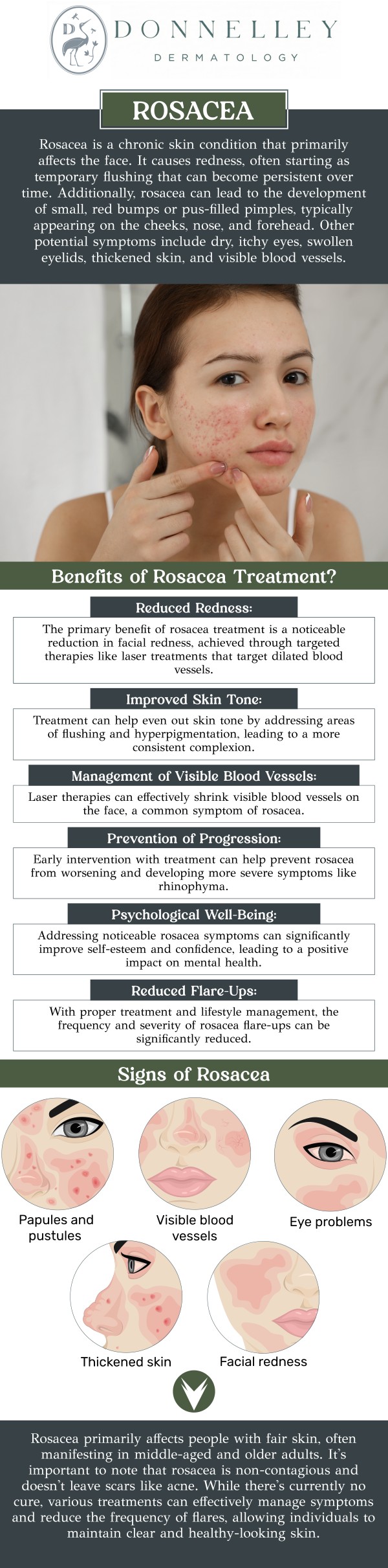
Table of Contents:
What is rosacea, and what causes it?
What are the most common symptoms of rosacea?
How can I tell if I have rosacea or sensitive skin?
When should I see a healthcare professional for rosacea?
What factors can trigger a rosacea flare-up?
How can Dr. Naomi Donnelley, MD, FAAD, at Donnelley Dermatology, PLLC help treat rosacea in NYC?
Rosacea is a long-term skin condition that may cause your face to flush easily, remain persistently red, or feel unusually sensitive. It commonly affects the cheeks, nose, forehead, and chin, although symptoms can vary from person to person. You may notice visible facial blood vessels, acne-like bumps, warmth, burning, or stinging. Dr. Naomi Donnelley, MD, FAAD, at Donnelley Dermatology, PLLC, can evaluate these changes to determine whether they are related to rosacea or another skin concern.
The exact cause of rosacea is not fully understood, but genetics, immune-system activity, skin microorganisms, and changes in facial blood vessels may contribute to its development. Sunlight, heat, emotional stress, spicy foods, alcohol, and irritating skincare products do not necessarily cause rosacea, but they may worsen your symptoms. Identifying the factors that affect your skin can help you reduce flare-ups and make better decisions about your daily skincare routine.
Rosacea symptoms may begin with facial flushing that comes and goes, particularly after exercise, sun exposure, emotional stress, or sudden temperature changes. Over time, redness may remain visible for longer periods. You may also experience burning, stinging, swelling, dryness, sensitivity, or small visible blood vessels around your cheeks and nose. Dr. Naomi Donnelley, MD, FAAD, at Donnelley Dermatology, PLLC, can assess the location and pattern of these symptoms to support an accurate diagnosis.
Some people develop red bumps or pus-filled blemishes that resemble acne, while others experience eye dryness, watering, irritation, or swollen eyelids. Symptoms may also appear differently depending on your skin tone and the form of rosacea affecting you. Because each case is unique, a professional dermatologic evaluation can help identify your specific concerns and determine which care options may be appropriate for your skin.
Sensitive skin often becomes irritated after contact with a particular fragrance, cosmetic product, active ingredient, or environmental condition. Your skin may feel dry, itchy, tight, or uncomfortable, but the reaction may improve once the irritating product is removed. Rosacea can also cause sensitivity, but it is more likely to involve repeated flushing, persistent central facial redness, visible blood vessels, or acne-like bumps. Dr. Naomi Donnelley, MD, FAAD, at Donnelley Dermatology, PLLC, can examine your skin and help distinguish between these concerns.
You may be experiencing rosacea if symptoms repeatedly affect the center of your face or occur even while you are using gentle, fragrance-free products. Tracking your skincare products, meals, activities, and flare-ups may reveal useful patterns. Since rosacea can resemble acne, contact dermatitis, allergies, or sun damage, receiving a professional diagnosis can help you avoid products or treatments that may further irritate your skin.
You should consider seeing a healthcare professional if facial redness repeatedly returns, lasts for extended periods, or is accompanied by burning, swelling, bumps, visible blood vessels, or skin thickening. An evaluation may also be helpful if your skin has become increasingly reactive or if symptoms interfere with wearing makeup, using skincare products, or feeling comfortable in social settings. Dr. Naomi Donnelley, MD, FAAD, at Donnelley Dermatology, PLLC, can evaluate your symptoms and recommend care based on your individual skin needs.
Timely attention is especially important if rosacea begins affecting your eyes. Dryness, redness, swollen eyelids, blurred vision, light sensitivity, or a gritty sensation may indicate ocular rosacea. Professional care can help you understand your condition, control active inflammation, reduce discomfort, and lower the likelihood of symptoms becoming more persistent or difficult to manage.
Rosacea may worsen after exposure to sunlight, hot weather, cold wind, strenuous exercise, emotional stress, spicy meals, alcohol, or hot beverages. You may also notice increased redness after taking a hot shower, using a sauna, entering a heated room, or applying certain cosmetics. Dr. Naomi Donnelley, MD, FAAD, at Donnelley Dermatology, PLLC, can help you identify possible triggers and develop practical strategies for protecting your skin without unnecessarily restricting your routine.
Keeping a simple journal of your meals, skincare products, weather exposure, activities, and symptoms can help you recognize which factors consistently affect your skin. Once your personal triggers are identified, flare-ups may be reduced through gentle skincare, daily sun protection, temperature management, and small lifestyle adjustments. The goal is not to avoid every possible trigger, but to manage the specific factors that repeatedly worsen your symptoms.
Dr. Naomi Donnelley, MD, FAAD, can evaluate facial redness, flushing, visible blood vessels, skin sensitivity, acne-like bumps, and eye-related concerns to determine whether rosacea is causing your symptoms. During your visit to Donnelley Dermatology, PLLC, she can review when your symptoms began, what appears to trigger them, which skincare products you use, and how the condition affects your comfort, appearance, and confidence.
Your care plan can be personalized according to your rosacea symptoms, skin tone, lifestyle, and treatment goals. Recommendations may include a gentle skincare routine, daily sun protection, trigger-management strategies, appropriate medical care, or laser and light-based procedures when suitable. Follow-up visits allow Dr. Donnelley to monitor your response and adjust your plan to support calmer, clearer, and healthier-looking skin. For more information, contact us or schedule an appointment online. We are conveniently located at 1075 Park Ave , #1C, New York, NY, 10128. We serve patients from New York NY, Bronx NY, Brooklyn NY, Manhattan NY, Harlem NY, and surrounding areas.

Check Out Our 5 Star Reviews


ADDITIONAL SERVICES YOU MAY NEED
▸ Acne Treatment
▸ Birthmarks
▸ Eczema
▸ Warts
▸ Molluscum Contagiosum
▸ Viral Rashes
▸ Drug-Induced Rashes
▸ Rashes Treatment
▸ Seborrheic Dermatitis
▸ Fungal Infections
▸ Hives
▸ Dysport
▸ Fillers
▸ Fine Lines & Wrinkles
▸ Facial Volume
▸ Microneedling
▸ Fraxel Laser
▸ Intense Pulsed Light (IPL)
▸ Venous Stasis Dermatitis
▸ Pigmentation Treatment
▸ Melasma Treatment
▸ Dark Spots
▸ Freckles and Lentigines
▸ Cyst Excisions
▸ Mole Removal
▸ Skin Tags
▸ Skin Cancer Screening
▸ Basal Cell Carcinoma (BCC)
▸ Squamous Cell Carcinoma (SCC)
▸ Melanoma
▸ General Dermatology
▸ Psoriasis
▸ Rosacea
▸ Herpes Infections
▸ Shingles
▸ Hair Loss
▸ Dry Skin
▸ Seborrheic Keratoses

ADDITIONAL SERVICES YOU MAY NEED
▸ Acne Treatment
▸ Birthmarks
▸ Eczema
▸ Warts
▸ Molluscum Contagiosum
▸ Viral Rashes
▸ Drug-Induced Rashes
▸ Rashes Treatment
▸ Seborrheic Dermatitis
▸ Fungal Infections
▸ Hives
▸ Dysport
▸ Fillers
▸ Fine Lines & Wrinkles
▸ Facial Volume
▸ Microneedling
▸ Fraxel Laser
▸ Intense Pulsed Light (IPL)
▸ Pigmentation Treatment
▸ Melasma Treatment
▸ Dark Spots
▸ Freckles and Lentigines
▸ Cyst Excisions
▸ Mole Removal
▸ Skin Tags
▸ Skin Cancer Screening
▸ Basal Cell Carcinoma (BCC)
▸ Squamous Cell Carcinoma (SCC)
▸ Melanoma
▸ General Dermatology
▸ Psoriasis
▸ Rosacea
▸ Herpes Infections
▸ Shingles
▸ Hair Loss
▸ Dry Skin
▸ Seborrheic Keratoses
▸ Venous Stasis Dermatitis



 Send Text
 How May I Help You?