


Dermatologist for Hives Treatment in New York, NY
Hives can appear as raised, itchy welts that may develop suddenly and vary in size, location, and duration. Identifying possible triggers and determining whether symptoms are acute or chronic can help guide appropriate care. Dr. Naomi Donnelley, MD, FAAD at Donnelley Dermatology provides individualized evaluations for patients experiencing hives, reviewing symptoms, medical history, possible allergens, medications, and other contributing factors. For more information, contact us or schedule an appointment online. We are conveniently located at 1075 Park Ave, #1C, New York, NY, 10128.
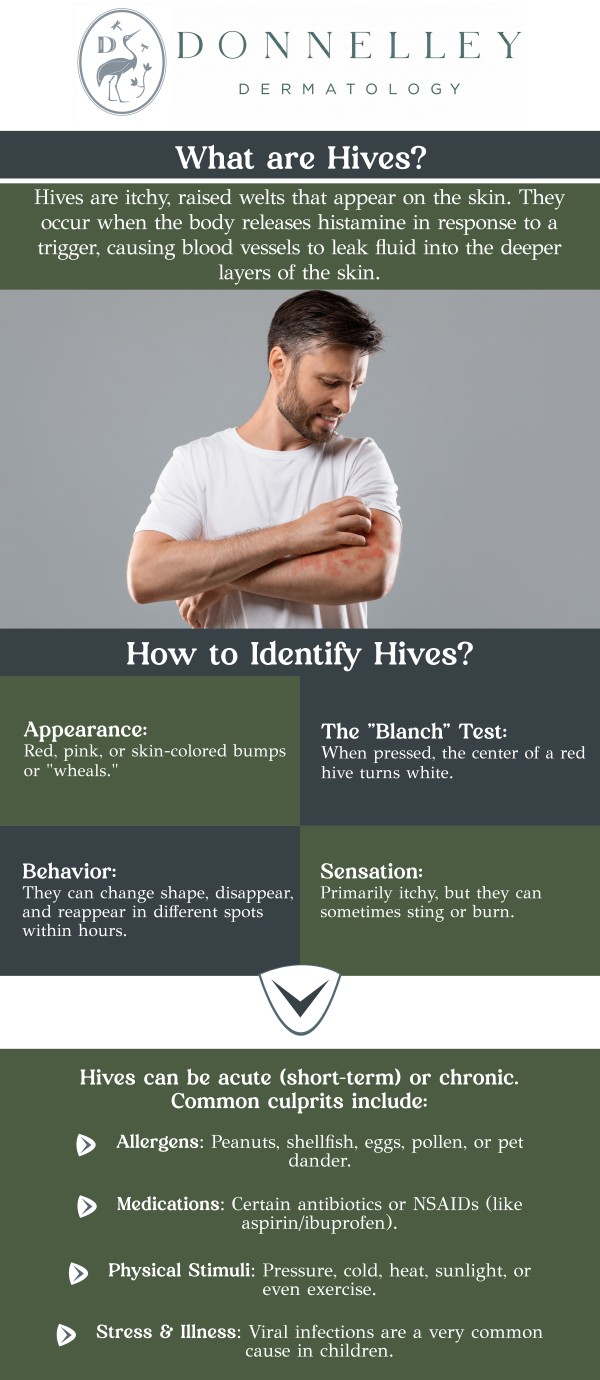
Table of Contents:
How long do hives usually last?
When should persistent hives be evaluated by a dermatologist?
How can a dermatologist help identify triggers for recurring hives?
Can a dermatologist help manage hives that keep coming back?
How can Dr. Naomi S. Donnelley help manage persistent and recurring hives?
Hives, also known as urticaria, can last anywhere from a few hours to several weeks depending on the cause and individual response. A single hive typically disappears within 24 hours, although new welts may continue to appear as older ones fade. For many people, an episode of acute hives clears within a few days to a few weeks.
When hives continue to appear for six weeks or longer, they are considered chronic hives. Chronic hives may come and go for months or longer, with individual welts still generally resolving within a day. Persistent or frequently recurring hives may benefit from a dermatologic evaluation to look for possible triggers and determine an appropriate management approach.
At Donnelley Dermatology, Dr. Donnelley and her team evaluate both acute and chronic hives to better understand possible contributing factors and the pattern of symptoms. Our team develops a personalized treatment plan focused on relieving itching, reducing flare-ups, and helping patients manage recurring hives more effectively.
Most hives resolve within a few days or weeks, but persistent or frequently recurring outbreaks may need professional evaluation. The American Academy of Dermatology recommends seeing a board-certified dermatologist when hives continue for six weeks or longer, which is considered chronic hives.
Consider seeing a dermatologist if:
• Hives continue to appear for six weeks or longer.
• Hives repeatedly disappear and return without an obvious cause.
• The rash covers a large area of the body.
• Itching or discomfort begins interfering with sleep or everyday activities.
• Symptoms do not improve with appropriate initial care.
• Hives seem to be triggered by pressure, temperature changes, sunlight, medications, or other recurring factors.
• You are unsure whether the skin changes are actually hives or another dermatologic condition.
• Episodes are becoming more frequent or difficult to manage.
At Donnelley Dermatology, our team can evaluate persistent hives, review possible triggers, and develop a personalized approach to controlling itching and recurring flare-ups. If hives occur with difficulty breathing or swelling of the tongue, lips, mouth, or throat, emergency medical care is needed rather than waiting for a dermatology appointment.
A dermatologist can help identify possible triggers for recurring hives by reviewing when the outbreaks began, how often they occur, how long individual welts last, and whether certain activities or exposures seem to make them worse. A detailed medical history may include questions about recent illnesses, medications, foods, environmental exposures, stress, and changes in daily routines that could be associated with flare-ups.
The dermatologist will also examine the skin and consider the pattern and distribution of the hives. Patients may be encouraged to keep a symptom diary documenting foods, activities, medications, temperature changes, and other exposures around the time symptoms develop. When appropriate, additional testing may be considered to investigate possible allergies or underlying medical factors, although a specific trigger cannot always be identified in chronic hives.
At Donnelley Dermatology, Dr. Naomi Donnelley and her team provide personalized evaluation for patients experiencing recurring or unexplained hives. Our team works to identify possible contributing factors, distinguish between different patterns of urticaria, and develop an individualized management plan focused on reducing itching, limiting flare-ups, and improving day-to-day comfort.
A dermatologist can help manage recurring hives by evaluating how often flare-ups occur, how long they last, and whether certain triggers or underlying factors may be contributing. Hives that repeatedly occur for six weeks or longer are considered chronic hives, and a dermatologist can help confirm the diagnosis and distinguish hives from other skin conditions that may look similar.
Management is personalized according to the frequency and severity of symptoms. A dermatologist may recommend appropriate medications to help control itching, swelling, and recurring welts while also discussing potential triggers and lifestyle factors that may influence flare-ups. Even when a specific cause cannot be identified, chronic hives can often still be managed effectively with an individualized treatment plan.
At Donnelley Dermatology, Dr. Naomi Donnelley and her team evaluate recurring hives and develop personalized strategies focused on improving symptom control and reducing the impact of flare-ups. Our team monitors how the skin responds over time and can adjust the management approach as needed to support greater comfort and better day-to-day control.
Dr. Naomi Donnelley, a board-certified dermatologist with more than 21 years of post-residency experience, provides detailed evaluation for patients experiencing persistent or recurring hives. She reviews the timing, frequency, duration, appearance, and distribution of outbreaks while considering possible contributing factors such as medications, illnesses, environmental exposures, physical triggers, and changes in daily routines. Dr. Donnelley also carefully examines the skin to confirm that the welts are consistent with hives and to distinguish them from other dermatologic conditions that may appear similar. Her extensive experience in medical dermatology supports an individualized approach when hives continue for weeks or repeatedly return without an obvious cause.
At Donnelley Dermatology in New York, NY, Dr. Donnelley and her team develop personalized management plans based on the severity and pattern of each patient’s hives. The focus may include controlling itching and swelling, identifying avoidable triggers when possible, monitoring recurring flare-ups, and adjusting treatment as symptoms change over time. Our team also provides practical guidance to help patients better understand their condition and recognize patterns that may contribute to outbreaks. Through careful follow-up and individualized dermatologic care, Dr. Donnelley aims to improve symptom control and reduce the impact of recurring hives on everyday comfort.
For more information, contact us or schedule an appointment online. We are conveniently located at 1075 Park Ave, #1C, New York, NY, 10128. We serve clients from New York NY, Bronx NY, Brooklyn NY, Manhattan NY, Harlem NY, and surrounding areas.

Check Out Our 5 Star Reviews


ADDITIONAL SERVICES YOU MAY NEED
▸ Acne Treatment
▸ Birthmarks
▸ Eczema
▸ Warts
▸ Molluscum Contagiosum
▸ Viral Rashes
▸ Drug-Induced Rashes
▸ Rashes Treatment
▸ Seborrheic Dermatitis
▸ Fungal Infections
▸ Hives
▸ Dysport
▸ Fillers
▸ Fine Lines & Wrinkles
▸ Facial Volume
▸ Microneedling
▸ Fraxel Laser
▸ Intense Pulsed Light (IPL)
▸ Venous Stasis Dermatitis
▸ Pigmentation Treatment
▸ Melasma Treatment
▸ Dark Spots
▸ Freckles and Lentigines
▸ Cyst Excisions
▸ Mole Removal
▸ Skin Tags
▸ Skin Cancer Screening
▸ Basal Cell Carcinoma (BCC)
▸ Squamous Cell Carcinoma (SCC)
▸ Melanoma
▸ General Dermatology
▸ Psoriasis
▸ Rosacea
▸ Herpes Infections
▸ Shingles
▸ Hair Loss
▸ Dry Skin
▸ Seborrheic Keratoses

ADDITIONAL SERVICES YOU MAY NEED
▸ Acne Treatment
▸ Birthmarks
▸ Eczema
▸ Warts
▸ Molluscum Contagiosum
▸ Viral Rashes
▸ Drug-Induced Rashes
▸ Rashes Treatment
▸ Seborrheic Dermatitis
▸ Fungal Infections
▸ Hives
▸ Dysport
▸ Fillers
▸ Fine Lines & Wrinkles
▸ Facial Volume
▸ Microneedling
▸ Fraxel Laser
▸ Intense Pulsed Light (IPL)
▸ Pigmentation Treatment
▸ Melasma Treatment
▸ Dark Spots
▸ Freckles and Lentigines
▸ Cyst Excisions
▸ Mole Removal
▸ Skin Tags
▸ Skin Cancer Screening
▸ Basal Cell Carcinoma (BCC)
▸ Squamous Cell Carcinoma (SCC)
▸ Melanoma
▸ General Dermatology
▸ Psoriasis
▸ Rosacea
▸ Herpes Infections
▸ Shingles
▸ Hair Loss
▸ Dry Skin
▸ Seborrheic Keratoses
▸ Venous Stasis Dermatitis



 Send Text
 How May I Help You?