


Advanced Dysport Treatment for Facial Frown Lines in New York, NY
Dysport injections can be tailored to address areas affected by repeated facial movements while helping maintain your unique expressions and appearance. At Donnelley Dermatology, PLLC, Dr. Naomi Donnelley, a board-certified dermatologist, offers advanced Dysport treatments designed to help soften the appearance of dynamic wrinkles and refresh facial features. Our team creates personalized treatment plans based on facial anatomy, expression patterns, and aesthetic goals to support balanced, natural-looking results. For more information, contact us or schedule an appointment online. We are conveniently located at 1075 Park Ave , #1C, New York, NY, 10128.
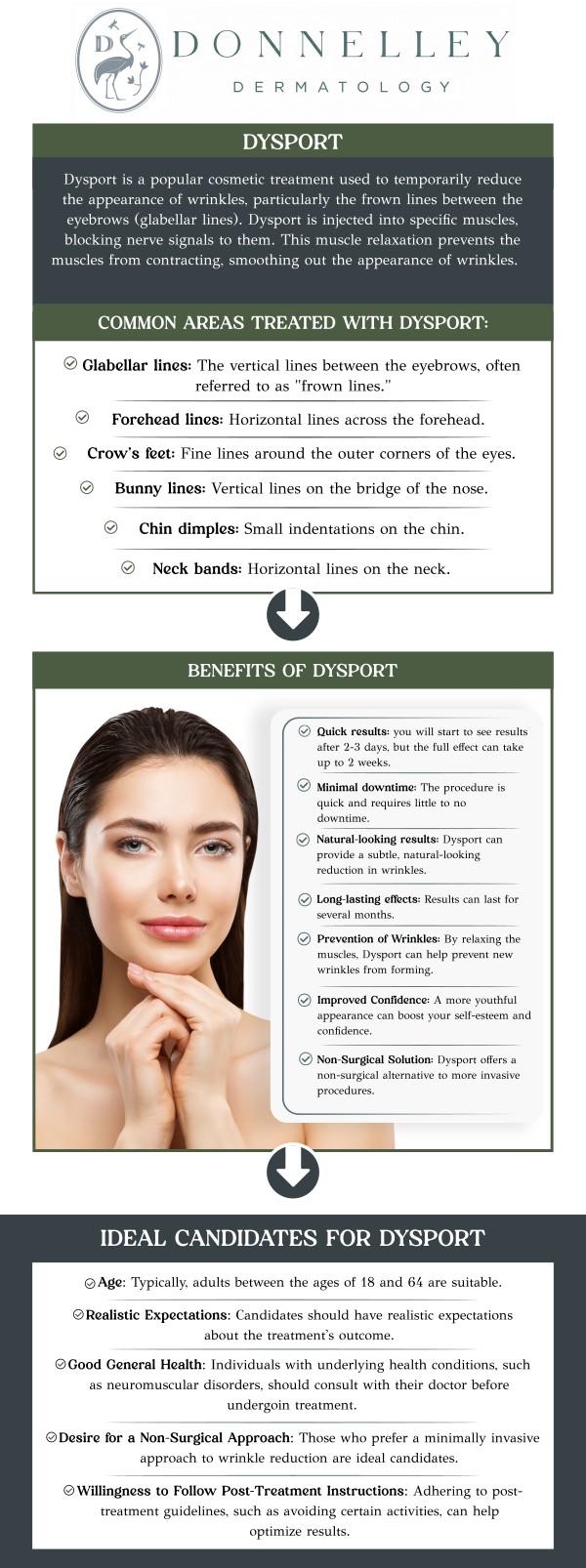
Table of Contents:
How can Dysport treatment help improve the appearance of forehead lines and wrinkles?
What results can you expect after receiving Dysport treatment?
How often should you schedule Dysport treatment to maintain your results?
Can Dysport treatment help create a refreshed and natural-looking facial appearance?
How Can Dr. Naomi Donnelley, MD, FAAD, at Donnelley Dermatology Provide Advanced Dysport Treatment for Facial Rejuvenation?
Advanced Facial Areas and Specialized Dysport Applications
FDA Approval and Regulatory Considerations for Advanced Dysport Treatment
Patient Safety, Contraindications, and Medical Precautions
Potential Side Effects and FDA Boxed Warning
Post-Treatment Care and Follow-Up
Treatment Intervals
Medical References
Dysport treatment can help improve the appearance of forehead lines and wrinkles by targeting the facial muscles responsible for repeated movements that contribute to dynamic wrinkles. Over time, expressions such as raising the eyebrows or frowning can create visible lines across the forehead. Dysport works by temporarily relaxing these targeted muscles, which may help soften the appearance of wrinkles and create a smoother-looking forehead.
The treatment is customized based on each client’s facial structure, muscle activity, and aesthetic goals. A personalized approach helps address forehead lines while maintaining natural facial movement and expression. Clients may experience a refreshed appearance as the treated area becomes smoother and more balanced.
At Donnelley Dermatology, PLLC, Dr. Naomi Donnelley provides advanced Dysport treatments tailored to each client’s cosmetic needs. Our team focuses on careful evaluation, customized treatment planning, and natural-looking results to help clients achieve a more youthful and refreshed facial appearance while preserving their unique features.
After receiving Dysport treatment, clients may notice a smoother and more refreshed facial appearance as targeted facial muscles become more relaxed. Results can vary based on individual factors, but common outcomes may include:
• Softer Appearance of Dynamic Wrinkles: Dysport may help reduce the appearance of expression-related lines, including forehead lines and frown lines between the eyebrows.
• More Refreshed Facial Appearance: Treatment may help create a rested and rejuvenated look while maintaining natural facial expressions.
• Natural-Looking Results: When personalized properly, Dysport can enhance facial aesthetics without creating an overly treated or frozen appearance.
• Improved Facial Smoothness: Relaxing targeted muscles may help create a smoother-looking skin surface in treated areas.
• Gradual Results: Improvements may become more noticeable over the days following treatment as Dysport takes effect.
• Temporary Rejuvenation: Results are not permanent, and follow-up treatments may help maintain the refreshed appearance over time.
At Donnelley Dermatology, PLLC, Dr. Naomi Donnelley provides customized Dysport treatment plans based on each client’s facial features, goals, and desired outcomes to help achieve balanced, natural-looking results.
The frequency of Dysport treatments can vary depending on individual factors such as metabolism, muscle activity, treatment areas, and aesthetic goals. Many clients schedule maintenance treatments periodically to help preserve a smoother and refreshed appearance as the effects of Dysport gradually wear off. A personalized treatment timeline is determined based on how your skin responds and the results you want to maintain.
During a consultation, a provider evaluates your facial movement patterns and discusses the best approach for ongoing Dysport care. Regular follow-up treatments can help maintain consistent results while ensuring that the treatment continues to align with your changing facial aesthetics and cosmetic preferences.
At Donnelley Dermatology, PLLC, Dr. Naomi Donnelley creates customized Dysport treatment plans based on each client’s unique needs and goals. Our team provides personalized guidance on treatment timing, aftercare, and maintenance recommendations to support natural-looking facial rejuvenation. Through ongoing cosmetic dermatology care, clients can work toward maintaining a refreshed and balanced appearance.
Dysport treatment can help create a refreshed and natural-looking facial appearance by reducing the appearance of dynamic wrinkles caused by repeated facial movements. Over time, expressions such as smiling, frowning, and squinting can contribute to visible lines in areas like the forehead and between the eyebrows. Dysport works by temporarily relaxing targeted facial muscles, helping soften these lines while allowing clients to maintain their natural expressions.
A personalized Dysport treatment approach considers each client’s facial structure, skin concerns, and aesthetic goals. Rather than creating a frozen appearance, customized treatment focuses on achieving balanced results that enhance facial features while maintaining a natural look. The treatment plan may vary depending on the areas being addressed and the level of improvement desired.
At Donnelley Dermatology, PLLC, Dr. Naomi Donnelley provides advanced Dysport treatments tailored to each client’s individual needs. Our team focuses on personalized cosmetic dermatology care, careful treatment planning, and natural-looking outcomes. By combining expertise with a detailed understanding of facial aesthetics, Dr. Donnelley helps clients achieve a smoother, more refreshed appearance while preserving their unique facial character.
Dr. Naomi Donnelley at Donnelley Dermatology, PLLC, in New York, NY, is a highly experienced, board-certified dermatologist with over 21 years of post-residency experience, specializing in medical, surgical, and cosmetic dermatology. Throughout her distinguished career, she has earned numerous accolades, including recognition as a Top Doctor and being listed in the Top 100 Registry. Dr. Donnelley treats both pediatric and adult clients, with a reputation for providing meticulous care and fostering positive client relationships. Known for her “less is more” approach to cosmetic dermatology, she focuses on achieving natural and subtle results.
For Dysport treatment, Dr. Donnelley carefully evaluates each client’s facial anatomy, muscle movement, and aesthetic goals to create a personalized plan that enhances facial features while maintaining a natural appearance. Dr. Donnelley combines her advanced dermatology expertise with a thoughtful approach to facial rejuvenation. Our team focuses on providing individualized Dysport treatments that address concerns such as dynamic wrinkles while preserving facial expression and balance. Through detailed consultations and customized treatment strategies, we help clients achieve a refreshed, smoother-looking appearance that aligns with their personal cosmetic goals.
Dysport® (abobotulinumtoxinA) is an injectable neuromodulator that temporarily reduces muscle activity responsible for certain facial expressions and dynamic wrinkles. Beyond its FDA-approved cosmetic use for glabellar lines, healthcare professionals may consider Dysport for other facial concerns through individualized, off-label treatment planning.
Potential advanced applications include:
• Lower Face Rejuvenation and Lip Flip: Carefully placed injections into the orbicularis oris muscle may temporarily alter upper-lip movement, creating a subtle outward rotation of the lip without adding volume. Treatment of the depressor anguli oris muscles may also help soften the downward appearance of the mouth corners in selected patients. Possible risks include temporary changes in smiling, speaking, drinking, or lip movement.
• Chin Dimpling (Peau d’Orange): Injections targeting the mentalis muscle may reduce excessive muscle contraction responsible for a pebbled or dimpled chin appearance. Treatment may also soften certain movement-related chin creases, although results vary.
• Masseter Contouring and Jawline Slimming: Botulinum toxin injections into enlarged masseter muscles may temporarily reduce muscle prominence, creating a slimmer lower-face appearance in appropriately selected patients. Some studies suggest possible short-term benefits for symptoms associated with bruxism, but treatment is not an established cure for teeth grinding. Possible complications include reduced chewing strength, facial asymmetry, and changes in facial contour.
• Platysmal Bands and Neck Contouring: Targeted botulinum toxin injections may temporarily soften prominent vertical platysmal bands and improve the appearance of certain jawline contours. Sometimes referred to as a Nefertiti neck lift, this technique is an off-label cosmetic application. Results depend on muscle activity, skin laxity, and individual anatomy. Treatment does not replace a surgical neck lift and may cause unwanted weakness or swallowing difficulties.
• Intradermal Micro-Dysport (Microbotox or Skin-Tox): Superficial botulinum toxin injection techniques have been investigated for potential improvements in skin oiliness, pore appearance, and skin texture. However, evidence remains limited, and results are not consistently established. Intradermal administration is not the FDA-approved route for Dysport, and this technique requires additional consideration of its off-label status and potential risks.
Not every advanced application is suitable for every patient. Treatment selection should be based on a comprehensive facial assessment, available clinical evidence, and an informed discussion of potential benefits and limitations.
FDA-Approved Cosmetic Indication
In the United States, Dysport is FDA-approved for the temporary improvement in the appearance of moderate to severe frown lines between the eyebrows (glabellar lines) associated with procerus and corrugator muscle activity in adults younger than 65.
Dysport works by inhibiting acetylcholine release at the neuromuscular junction, temporarily reducing muscle contractions responsible for dynamic wrinkles.
Off-Label Cosmetic Applications
Dysport injections for forehead lines, crow’s feet, lip flips, chin dimpling, masseter contouring, and neck bands are considered off-label cosmetic uses in the United States.
Off-label use refers to prescribing or administering an FDA-approved medication for an indication, treatment area, or technique not included in its approved labeling. Such use may be clinically appropriate when supported by professional judgment, relevant evidence, patient selection, and informed consent.
However, clinical evidence and safety data vary across treatment areas. Patients should understand that FDA approval for glabellar lines does not establish the safety or effectiveness of every advanced cosmetic application.
Product-Specific Dosing and Administration
Dysport potency units are specific to abobotulinumtoxinA and cannot be directly converted into units of Botox®, Xeomin®, Daxxify®, Jeuveau®, or other botulinum toxin products.
Dysport’s approved prescribing information specifies intramuscular administration. Appropriate injection technique, dosing, and patient selection are particularly important when considering off-label cosmetic applications.
Patient safety begins with medical screening, facial anatomy assessment, and an understanding of possible adverse reactions.
Contraindications to Dysport Treatment
According to FDA prescribing information, Dysport should not be administered to patients with:
• Cow’s Milk Protein Allergy: Dysport contains trace amounts of cow’s milk protein and is contraindicated in individuals with a known allergy to cow’s milk protein. This is distinct from lactose intolerance.
• Hypersensitivity to Botulinum Toxin Products: Patients with known hypersensitivity to any botulinum toxin product or any Dysport ingredient, including human albumin, should not receive treatment.
• Infection at the Proposed Injection Site: Patients with an active infection at the planned injection location should postpone treatment until the infection has resolved and their healthcare professional determines that injection is appropriate.
Medical Conditions Requiring Additional Precautions
• Neuromuscular Disorders: Patients with myasthenia gravis, Lambert-Eaton syndrome, amyotrophic lateral sclerosis (ALS), or other neuromuscular conditions may have an increased risk of excessive muscle weakness, swallowing problems, or respiratory complications.
• Swallowing and Breathing Difficulties: Patients with existing swallowing or respiratory disorders may be more vulnerable to complications associated with botulinum toxin effects.
• Pregnancy and Breastfeeding: Adequate human safety data are unavailable. Elective cosmetic treatment is generally deferred during pregnancy and breastfeeding.
• Medication Interactions: Patients should disclose all medications, especially aminoglycoside antibiotics, muscle relaxants, anticholinergic medications, and drugs that affect neuromuscular transmission. Blood-thinning medications and certain supplements may increase bruising risk. Prescribed medications should not be stopped without medical approval.
Common, mild side effects after Dysport® injections include localized redness, swelling, bruising, tenderness, headache, and transient eyelid swelling. Unintended product diffusion may occasionally cause temporary muscle weakness, eyelid drooping (ptosis), facial asymmetry, or dry eyes.
FDA Boxed Warning (Distant Spread of Toxin Effect):
Rarely, botulinum toxin effects can spread beyond the injection area hours to weeks after treatment. Warning signs include generalized muscle weakness, double or blurred vision, hoarseness, difficulty speaking, difficulty swallowing, or breathing problems. If you experience difficulty breathing, speaking, or swallowing, seek emergency medical care immediately.
• Avoid Pressure: Do not rub, massage, or apply pressure to treated sites for 24–48 hours, and defer facial treatments to prevent product migration.
• Positioning & Exercise: Avoid lying flat for the first several hours after injection. Refrain from strenuous workouts and intense heat (saunas/hot tubs) for at least 2–24 hours as directed.
• Bruising: Disclose any blood-thinning supplements or medications prior to treatment; never pause prescribed anticoagulants without your doctor’s clearance.
• When to Call: Contact your dermatologist for persistent eye irritation, unexpected facial weakness, or significant eyelid drooping.
To maintain optimal safety and reduce the risk of neutralizing antibody formation, repeat Dysport injections for frown lines should not be administered more frequently than once every three months.
At Donnelley Dermatology in New York, NY, Dr. Naomi Donnelley, MD, FAAD, conducts a thorough anatomical assessment to ensure Dysport treatments are safe, individualized, and designed to preserve your natural facial expression.
For more information, contact us or schedule an appointment online. We are conveniently located at 1075 Park Ave , #1C, New York, NY, 10128. We serve clients from New York NY, Bronx NY, Brooklyn NY, Manhattan NY, Harlem NY, and surrounding areas.
U.S. Food and Drug Administration (FDA): Dysport Prescribing Information – FDA-approved indications, contraindications, dosing, treatment intervals, and boxed safety warnings.
American Academy of Dermatology (AAD): Botulinum Toxin Therapy FAQs – Treatment safety, possible side effects, recovery, and aftercare precautions.
National Library of Medicine (PubMed): Botulinum Toxin Applications in the Lower Face and Neck – Clinical evidence for lower-face rejuvenation, masseter contouring, and neck treatments.
National Library of Medicine (PubMed): Emerging Off-Label Esthetic Uses of Botulinum Toxin in Dermatology – Off-label facial applications, clinical evidence, and treatment limitations.
National Library of Medicine (PubMed): Use of Micro Botulinum Toxin for a Face-Lifting Effect: A Systematic Review – Microbotox techniques, clinical outcomes, and limitations of available evidence.

Check Out Our 5 Star Reviews


ADDITIONAL SERVICES YOU MAY NEED
▸ Acne Treatment
▸ Birthmarks
▸ Eczema
▸ Warts
▸ Molluscum Contagiosum
▸ Viral Rashes
▸ Drug-Induced Rashes
▸ Rashes Treatment
▸ Seborrheic Dermatitis
▸ Fungal Infections
▸ Hives
▸ Dysport
▸ Fillers
▸ Fine Lines & Wrinkles
▸ Facial Volume
▸ Microneedling
▸ Fraxel Laser
▸ Intense Pulsed Light (IPL)
▸ Venous Stasis Dermatitis
▸ Pigmentation Treatment
▸ Melasma Treatment
▸ Dark Spots
▸ Freckles and Lentigines
▸ Cyst Excisions
▸ Mole Removal
▸ Skin Tags
▸ Skin Cancer Screening
▸ Basal Cell Carcinoma (BCC)
▸ Squamous Cell Carcinoma (SCC)
▸ Melanoma
▸ General Dermatology
▸ Psoriasis
▸ Rosacea
▸ Herpes Infections
▸ Shingles
▸ Hair Loss
▸ Dry Skin
▸ Seborrheic Keratoses

ADDITIONAL SERVICES YOU MAY NEED
▸ Acne Treatment
▸ Birthmarks
▸ Eczema
▸ Warts
▸ Molluscum Contagiosum
▸ Viral Rashes
▸ Drug-Induced Rashes
▸ Rashes Treatment
▸ Seborrheic Dermatitis
▸ Fungal Infections
▸ Hives
▸ Dysport
▸ Fillers
▸ Fine Lines & Wrinkles
▸ Facial Volume
▸ Microneedling
▸ Fraxel Laser
▸ Intense Pulsed Light (IPL)
▸ Pigmentation Treatment
▸ Melasma Treatment
▸ Dark Spots
▸ Freckles and Lentigines
▸ Cyst Excisions
▸ Mole Removal
▸ Skin Tags
▸ Skin Cancer Screening
▸ Basal Cell Carcinoma (BCC)
▸ Squamous Cell Carcinoma (SCC)
▸ Melanoma
▸ General Dermatology
▸ Psoriasis
▸ Rosacea
▸ Herpes Infections
▸ Shingles
▸ Hair Loss
▸ Dry Skin
▸ Seborrheic Keratoses
▸ Venous Stasis Dermatitis



 Send Text
 How May I Help You?