


Skin Tag Removal Specialist in New York, NY
Skin tags are common, noncancerous skin growths that often develop in areas where skin rubs against skin or clothing. Although they are usually harmless, some may become irritated, uncomfortable, or cosmetically bothersome. Dr. Naomi Donnelley, MD, FAAD at Donnelley Dermatology evaluates each growth carefully and recommends an appropriate removal approach based on its size, location, and appearance. For more information, contact us or schedule an appointment online. We are conveniently located at 1075 Park Ave, #1C, New York, NY, 10128.
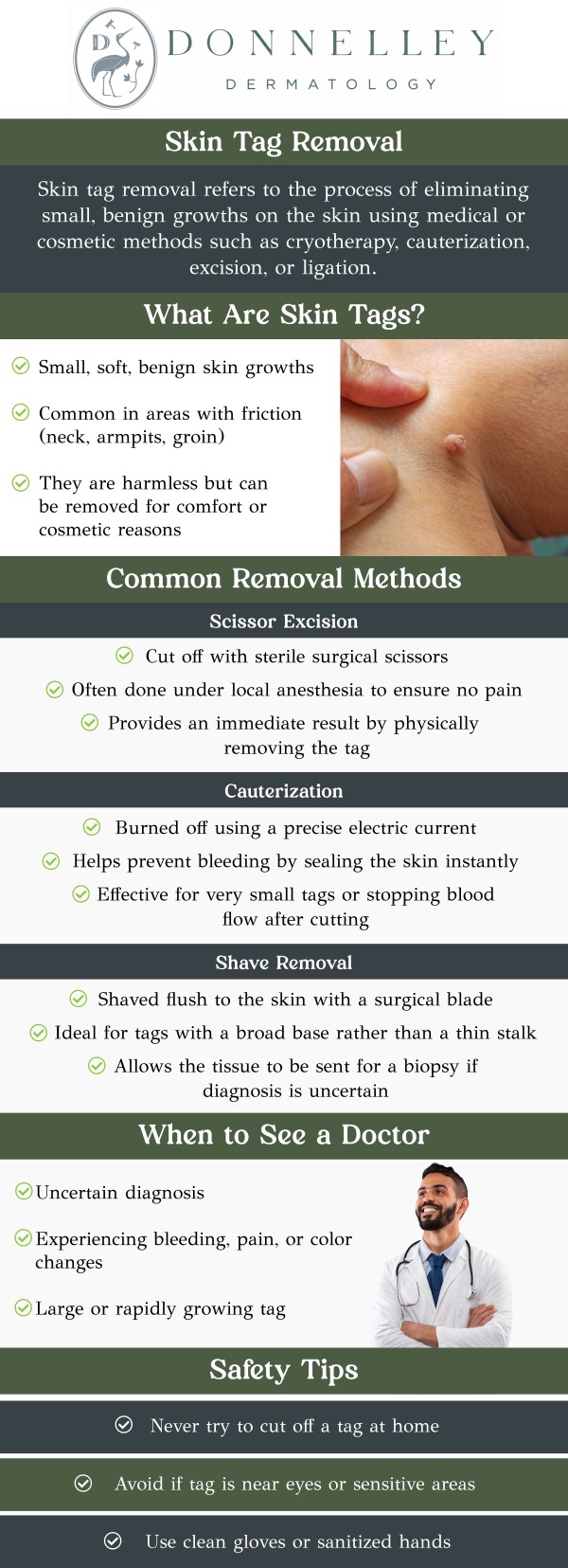
Table of Contents:
Is skin tag removal painful?
How long does skin take to heal after skin tag removal?
Does skin tag removal leave a scar?
When should you see a dermatologist for a skin tag?
Why choose Dr. Naomi S. Donnelley, a board-certified dermatologist, and her team at Donnelley Dermatology in New York, NY for skin tag removal?
Skin tag removal is generally well tolerated and usually causes only minimal discomfort. Depending on the size and location of the skin tag, removal may involve methods such as freezing, cauterization, excision, or ligation. A local anesthetic may be used when appropriate to numb the treatment area and help keep the procedure comfortable.
After removal, patients may experience mild tenderness, redness, or soreness around the treated area for a short time. These effects typically improve within a few days, although healing time can vary depending on the removal method and the number or location of skin tags treated. Following proper aftercare instructions can help support comfortable healing and reduce the risk of irritation.
At Donnelley Dermatology, Dr. Naomi Donnelley and our team provide careful skin tag evaluation and personalized removal in New York, NY. Professional removal helps ensure that the growth is properly assessed before treatment and can reduce risks associated with attempting to cut, burn, or remove skin tags at home.
Healing after skin tag removal usually begins within a few days, but the total recovery time depends on the size and location of the skin tag, the removal method used, and individual healing factors. Smaller skin tags often heal relatively quickly, while larger or deeper treatment areas may require more time.
A small scab may develop after removal and typically falls away naturally as the skin heals. Depending on whether the skin tag was removed by excision, cauterization, or cryotherapy, healing may take approximately one to three weeks. Mild redness, tenderness, or temporary discoloration can occur, and the skin may continue improving in appearance over the following several weeks.
At Donnelley Dermatology, Dr. Naomi Donnelley and our team provide personalized aftercare instructions to support proper healing and reduce the risk of irritation, infection, or noticeable scarring. Patients should keep the area clean, avoid picking at scabs, and follow all recommended aftercare guidance if they notice increasing pain, swelling, drainage, or other concerning symptoms.
Skin tag removal usually does not cause significant scarring, especially when smaller skin tags are treated professionally. However, the possibility of a visible mark can depend on the size and location of the skin tag, the removal technique used, the patient’s skin type, and how the area heals afterward.
A temporary scab, redness, or slight discoloration may develop after treatment and often becomes less noticeable as healing progresses. Larger skin tags or deeper removal areas may have a greater chance of leaving a small scar. Picking at the treated area, excessive irritation, or infection during healing can also increase the likelihood of noticeable scarring.
At Donnelley Dermatology, Dr. Naomi Donnelley and her team carefully evaluate each skin tag and select an appropriate removal approach based on its characteristics and location. Personalized aftercare instructions, including keeping the area clean and avoiding scratching or picking, can help support proper healing and minimize the appearance of scars.
Most skin tags are harmless and do not require medical treatment. However, a dermatologist should evaluate a skin growth if it becomes uncomfortable, changes in appearance, or you are uncertain whether it is actually a skin tag. Professional evaluation can help confirm the diagnosis and determine whether removal is appropriate.
• If the skin tag becomes painful, irritated, or tender.
• If it bleeds repeatedly or is easily injured.
• If it changes in color, shape, or size.
• If the growth begins to increase in size quickly.
• If you are unsure whether the growth is a skin tag.
• If it frequently catches on clothing, jewelry, or razors.
• If a skin tag near the eyelid irritates or affects comfort.
• If you want removal for cosmetic or comfort-related reasons.
• If multiple new skin growths appear and you would like them professionally evaluated.
• If you are considering removal and want to avoid the risks associated with attempting treatment at home.
At Donnelley Dermatology, Dr. Naomi Donnelley and our team can carefully examine skin tags and other growths to determine the most appropriate approach. When removal is recommended, treatment is personalized according to the skin tag’s size, location, and individual skin characteristics while prioritizing safe healing and cosmetic outcomes.
Dr. Naomi S. Donnelley is a board-certified dermatologist with more than 21 years of post-residency experience in medical, surgical, and cosmetic dermatology. Her extensive dermatologic background supports careful evaluation of skin tags before removal, helping distinguish them from other types of skin growths that may require different care. Dr. Donnelley considers the size, location, number, and appearance of each skin tag, as well as whether it causes irritation, bleeding, or discomfort, before recommending an appropriate removal approach. Her meticulous treatment style is especially valuable when skin tags develop in sensitive or highly visible areas.
At Donnelley Dermatology in New York, NY, Dr. Donnelley and her team provide personalized skin tag removal with attention to comfort, precision, healing, and cosmetic appearance. Depending on the characteristics of the skin tag, treatment may involve an appropriate in-office removal technique followed by individualized aftercare guidance. Dr. Donnelley’s experience treating both pediatric and adult patients, combined with her careful “less is more” approach to cosmetic dermatology, supports natural-looking outcomes while minimizing unnecessary treatment. Her recognition as a Top Doctor and inclusion in the Top 100 Registry further reflect her longstanding commitment to detailed dermatologic care.
For more information, contact us or schedule an appointment online. We are conveniently located at 1075 Park Ave, #1C, New York, NY, 10128. We serve clients from New York NY, Bronx NY, Brooklyn NY, Manhattan NY, Harlem NY, and surrounding areas.

Check Out Our 5 Star Reviews


ADDITIONAL SERVICES YOU MAY NEED
▸ Acne Treatment
▸ Birthmarks
▸ Eczema
▸ Warts
▸ Molluscum Contagiosum
▸ Viral Rashes
▸ Drug-Induced Rashes
▸ Rashes Treatment
▸ Seborrheic Dermatitis
▸ Fungal Infections
▸ Hives
▸ Dysport
▸ Fillers
▸ Fine Lines & Wrinkles
▸ Facial Volume
▸ Microneedling
▸ Fraxel Laser
▸ Intense Pulsed Light (IPL)
▸ Venous Stasis Dermatitis
▸ Pigmentation Treatment
▸ Melasma Treatment
▸ Dark Spots
▸ Freckles and Lentigines
▸ Cyst Excisions
▸ Mole Removal
▸ Skin Tags
▸ Skin Cancer Screening
▸ Basal Cell Carcinoma (BCC)
▸ Squamous Cell Carcinoma (SCC)
▸ Melanoma
▸ General Dermatology
▸ Psoriasis
▸ Rosacea
▸ Herpes Infections
▸ Shingles
▸ Hair Loss
▸ Dry Skin
▸ Seborrheic Keratoses

ADDITIONAL SERVICES YOU MAY NEED
▸ Acne Treatment
▸ Birthmarks
▸ Eczema
▸ Warts
▸ Molluscum Contagiosum
▸ Viral Rashes
▸ Drug-Induced Rashes
▸ Rashes Treatment
▸ Seborrheic Dermatitis
▸ Fungal Infections
▸ Hives
▸ Dysport
▸ Fillers
▸ Fine Lines & Wrinkles
▸ Facial Volume
▸ Microneedling
▸ Fraxel Laser
▸ Intense Pulsed Light (IPL)
▸ Pigmentation Treatment
▸ Melasma Treatment
▸ Dark Spots
▸ Freckles and Lentigines
▸ Cyst Excisions
▸ Mole Removal
▸ Skin Tags
▸ Skin Cancer Screening
▸ Basal Cell Carcinoma (BCC)
▸ Squamous Cell Carcinoma (SCC)
▸ Melanoma
▸ General Dermatology
▸ Psoriasis
▸ Rosacea
▸ Herpes Infections
▸ Shingles
▸ Hair Loss
▸ Dry Skin
▸ Seborrheic Keratoses
▸ Venous Stasis Dermatitis



 Send Text
 How May I Help You?