


Basal Cell Carcinoma (BCC) Treatment Specialist in New York, NY
Basal cell carcinoma (BCC) is the most common skin cancer, often appearing as a painless, raised, pearly bump on sun-exposed areas like the face, neck, and ears. While it rarely spreads, it can damage surrounding tissue if untreated. At Donnelley Dermatology, PLLC, Dr. Naomi S. Donnelley and our skilled team specialize in diagnosing and treating BCC. Our goal is to ensure the best possible outcomes for our patients, offering compassionate care throughout the treatment process. For more information, contact us or schedule an appointment online. We are conveniently located at 1075 Park Ave , #1C, New York, NY, 10128.

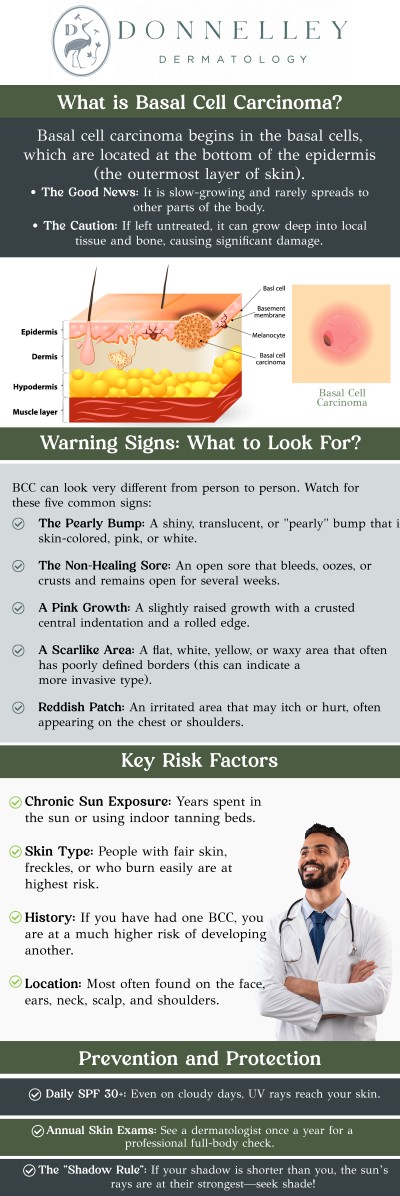
Table of Contents:
What is basal cell carcinoma?
What causes basal cell carcinoma?
Who is most at risk for basal cell carcinoma?
What are the early signs of basal cell carcinoma?
When Should I See Dr. Naomi S. Donnelley, a Board-Certified Dermatologist at Donnelley Dermatology, PLLC, for Basal Cell Carcinoma in NYC?
Basal cell carcinoma (BCC) is the most common form of skin cancer, originating in the basal cells located in the lower part of the epidermis. It typically develops in areas of the skin that are frequently exposed to the sun, such as the face, neck, ears, and back. BCC grows slowly and rarely spreads to other parts of the body, making it one of the least aggressive types of skin cancer. While it is generally not life-threatening, if left untreated, it can lead to significant tissue damage and disfigurement.
The primary cause of BCC is prolonged and repeated exposure to ultraviolet (UV) radiation from the sun or tanning beds, which damages the DNA in skin cells. Other factors, such as a history of sunburns, a weakened immune system, and genetic conditions like basal cell nevus syndrome, may increase the risk of developing this cancer. Early detection and treatment of BCC are crucial in preventing further complications, as the tumor can invade surrounding tissues if not addressed in its early stages.
At Donnelley Dermatology, PLLC, our team specializes in diagnosing and treating basal cell carcinoma. Our team is dedicated to providing compassionate care and ensuring the best possible outcomes for our patients. If you have concerns about skin changes or sun exposure, schedule an appointment with us today to receive expert guidance and care.
Basal cell carcinoma (BCC) is primarily caused by damage to the DNA in skin cells, often due to exposure to ultraviolet (UV) radiation. The factors that contribute to this damage and increase the risk of developing BCC include:
• Ultraviolet (UV) Radiation: Prolonged exposure to UV rays from the sun or tanning beds is the leading cause of BCC. UV radiation damages the skin’s basal cells, leading to mutations that can result in cancer.
• Fair Skin: Individuals with lighter skin, especially those who burn easily, are more susceptible to UV damage, making them at a higher risk for developing BCC.
• Previous Sunburns: People who have experienced frequent sunburns, particularly during childhood, have an increased risk of developing BCC later in life.
• Genetics: A family history of skin cancer or genetic conditions such as basal cell nevus syndrome can increase the likelihood of developing BCC.
• Weakened Immune System: Individuals with compromised immune systems, such as those undergoing organ transplantation or treatment for cancer, have a higher risk of skin cancer, including BCC.
• Age: The risk of BCC increases with age, as the accumulation of sun exposure over time leads to a greater likelihood of DNA damage in skin cells.
• Environmental Factors: Living in sunny or high-altitude areas, where there is increased UV exposure, can raise the risk of developing BCC.
At Donnelley Dermatology, PLLC, we understand the importance of early detection and prevention when it comes to basal cell carcinoma. Our experienced team provides comprehensive skin cancer screenings and personalized treatment options for those affected by BCC. Whether you need advice on sun protection or a thorough evaluation, we’re here to help you maintain healthy skin.
Several factors increase the risk of developing basal cell carcinoma (BCC). The individuals most at risk include:
• Fair-Skinned Individuals: People with lighter skin tones, especially those who burn easily, are more susceptible to UV damage and skin cancers like BCC.
• Those with a History of Sunburns: Individuals who have experienced frequent or severe sunburns, particularly during childhood, are at an elevated risk of developing BCC later in life.
• Individuals with Prolonged Sun Exposure: People who spend a lot of time outdoors, particularly in sunny areas or high-altitude locations, are more likely to develop BCC due to accumulated UV radiation exposure.
• Older Adults: As people age, the accumulation of sun damage over time increases the likelihood of developing BCC, making older adults more at risk.
• Family History of Skin Cancer: Those with a family history of skin cancer or basal cell carcinoma are at an increased risk due to genetic factors.
• People with a Weakened Immune System: Individuals with compromised immune systems, such as those undergoing organ transplants, chemotherapy, or long-term use of immunosuppressant medications, are more vulnerable to skin cancers, including BCC.
• People with Basal Cell Nevus Syndrome: This rare genetic condition increases the likelihood of developing multiple basal cell carcinomas, often at an earlier age.
• Those with a History of Tanning Bed Use: Individuals who have used tanning beds or have been exposed to artificial UV light are at a higher risk of developing BCC due to the damage caused by these sources of UV radiation.
Protecting your skin from excessive UV exposure and regularly monitoring for any skin changes can help reduce the risk of basal cell carcinoma. If you fall into any of these risk categories, it is important to schedule regular skin check-ups with a dermatologist. At Donnelley Dermatology, PLLC, we offer thorough skin cancer screenings to catch BCC early and provide effective treatments.
Basal cell carcinoma (BCC) often develops slowly and may appear as a small, subtle change in the skin. Early signs to watch for include:
• A Pearly or Waxy Bump: BCC often begins as a small, shiny, pearly bump that may resemble a pimple, especially on areas of the skin frequently exposed to the sun, such as the face or neck.
• A Flat, Flesh-Colored or Brown Scar-like Lesion: Some BCCs appear as flat, scar-like patches that are flesh-colored, brown, or pale. These may have a raised border.
• Bleeding or Crusting: The skin over the BCC may become flaky, crusty, or scabbed over, and the area may bleed or ooze, especially if scratched or injured.
• Sores that Don’t Heal: BCCs may resemble a non-healing sore or wound that persists for weeks or months without improving.
• Itching or Tenderness: The affected area may feel tender, itchy, or sore to the touch, which can be an early sign of BCC development.
• Visible Blood Vessels: In some cases, you may notice small blood vessels (telangiectasia) on the surface of the lesion, giving it a slightly red or purple appearance.
• Changes in Existing Moles or Lesions: If you notice any changes in size, shape, or color of an existing mole or spot, it could be a sign of BCC.
It’s important to note that basal cell carcinoma usually grows slowly and rarely spreads, but early detection is still key for effective treatment. If you notice any of these early signs or changes in your skin, it’s important to schedule an appointment with a dermatologist. At Donnelley Dermatology, PLLC, our board-certified dermatologists can evaluate any concerning skin changes and provide the best course of action for treatment.
If you notice any unusual changes in your skin, such as a persistent bump, sore, or scar that doesn’t heal, it’s important to see Dr. Naomi S. Donnelley, a Board-Certified Dermatologist at Donnelley Dermatology, PLLC, as soon as possible. Early detection of basal cell carcinoma (BCC) is crucial for effective treatment and to prevent the cancer from spreading to nearby tissues. Dr. Donnelley has extensive experience in diagnosing and treating various types of skin cancer, including BCC, and can provide a thorough skin examination to evaluate any concerning spots or growths.
You should also schedule a visit if you have a family history of skin cancer, frequent sun exposure, or a weakened immune system, as these factors can increase your risk for BCC. At Donnelley Dermatology, PLLC, Dr. Donnelley and her team offer personalized care to ensure that your skin health is properly managed. Whether you’re dealing with early signs of BCC or just want to have a routine skin check, Dr. Donnelley is committed to providing you with the highest level of care in a comfortable and welcoming environment.
For more information, contact us or schedule an appointment online. We are conveniently located at 1075 Park Ave , #1C, New York, NY, 10128. We serve clients from New York NY, Bronx NY, Brooklyn NY, Manhattan NY, Harlem NY, and surrounding areas.

Check Out Our 5 Star Reviews


ADDITIONAL SERVICES YOU MAY NEED
▸ Acne Treatment
▸ Birthmarks
▸ Eczema
▸ Warts
▸ Molluscum Contagiosum
▸ Viral Rashes
▸ Drug-Induced Rashes
▸ Rashes Treatment
▸ Seborrheic Dermatitis
▸ Fungal Infections
▸ Hives
▸ Dysport
▸ Fillers
▸ Fine Lines & Wrinkles
▸ Facial Volume
▸ Microneedling
▸ Fraxel Laser
▸ Intense Pulsed Light (IPL)
▸ Venous Stasis Dermatitis
▸ Pigmentation Treatment
▸ Melasma Treatment
▸ Dark Spots
▸ Freckles and Lentigines
▸ Cyst Excisions
▸ Mole Removal
▸ Skin Tags
▸ Skin Cancer Screening
▸ Basal Cell Carcinoma (BCC)
▸ Squamous Cell Carcinoma (SCC)
▸ Melanoma
▸ General Dermatology
▸ Psoriasis
▸ Rosacea
▸ Herpes Infections
▸ Shingles
▸ Hair Loss
▸ Dry Skin
▸ Seborrheic Keratoses

ADDITIONAL SERVICES YOU MAY NEED
▸ Acne Treatment
▸ Birthmarks
▸ Eczema
▸ Warts
▸ Molluscum Contagiosum
▸ Viral Rashes
▸ Drug-Induced Rashes
▸ Rashes Treatment
▸ Seborrheic Dermatitis
▸ Fungal Infections
▸ Hives
▸ Dysport
▸ Fillers
▸ Fine Lines & Wrinkles
▸ Facial Volume
▸ Microneedling
▸ Fraxel Laser
▸ Intense Pulsed Light (IPL)
▸ Pigmentation Treatment
▸ Melasma Treatment
▸ Dark Spots
▸ Freckles and Lentigines
▸ Cyst Excisions
▸ Mole Removal
▸ Skin Tags
▸ Skin Cancer Screening
▸ Basal Cell Carcinoma (BCC)
▸ Squamous Cell Carcinoma (SCC)
▸ Melanoma
▸ General Dermatology
▸ Psoriasis
▸ Rosacea
▸ Herpes Infections
▸ Shingles
▸ Hair Loss
▸ Dry Skin
▸ Seborrheic Keratoses
▸ Venous Stasis Dermatitis



 Send Text
 How May I Help You?