


Fine Lines and Wrinkles Treatment in New York, NY
Fine lines and wrinkles are common signs of aging that develop through changes in skin structure, repeated facial movements, and environmental exposure. At Donnelley Dermatology in New York, NY, Dr. Naomi Donnelley, MD, FAAD, a board-certified dermatologist, offers individualized evaluations and cosmetic treatments to help improve the appearance of facial wrinkles. Treatment recommendations are based on skin health, facial anatomy, clinical findings, and realistic aesthetic goals. For more information, contact us or schedule an appointment online. We are conveniently located at 1075 Park Ave , #1C, New York, NY, 10128.
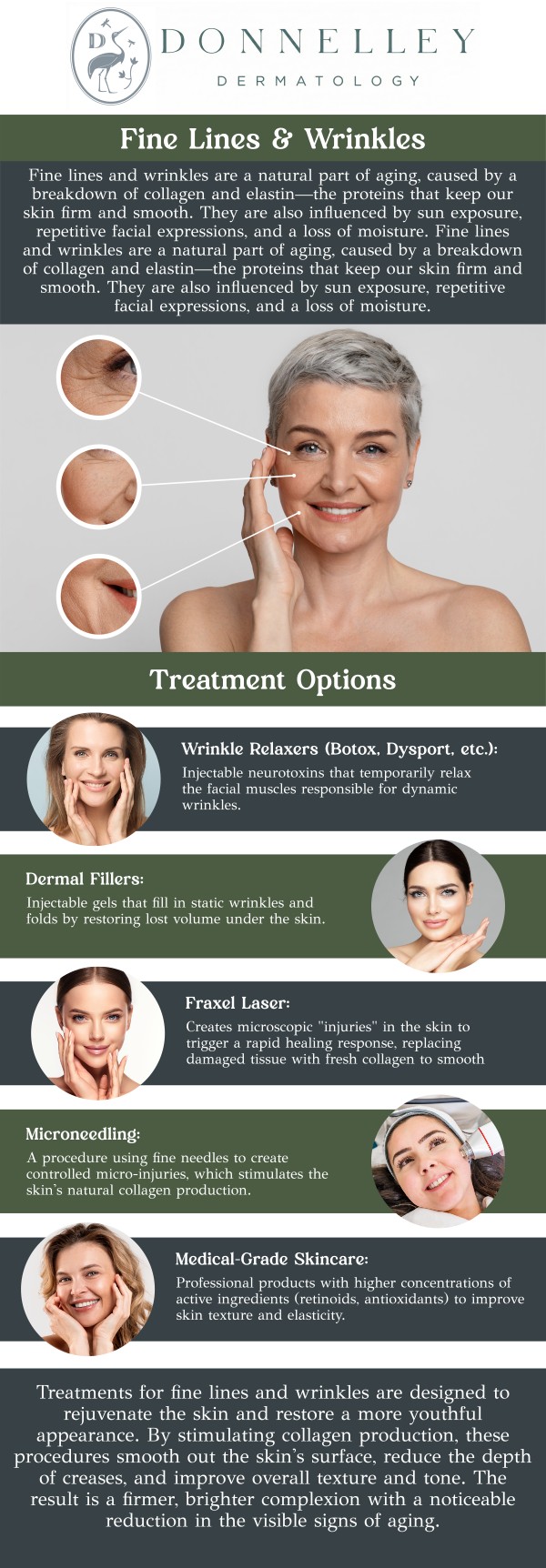
Table of Contents:
How do changes in collagen, elastin, and facial volume contribute to fine lines and wrinkles?
Which evidence-based dermatology treatments can improve different types of facial wrinkles?
How do skin type, facial anatomy, and wrinkle severity influence treatment selection?
What are the medical safety precautions and contraindications for fine lines and wrinkles treatments?
Medical References
Collagen, elastin, and underlying facial tissues contribute to the skin’s structure, strength, and elasticity. As aging progresses, changes in collagen production and organization reduce skin firmness, while alterations in elastin can affect the skin’s ability to return to its original shape after movement. Over time, these structural changes contribute to fine lines, deeper wrinkles, and reduced skin elasticity. Chronic ultraviolet (UV) exposure accelerates this process by damaging connective tissues and promoting premature skin aging, also known as photoaging.
Facial volume changes also influence the development of wrinkles. Age-related changes in facial fat compartments, bone, and supporting tissues may contribute to deeper folds, hollow areas, and altered facial contours. Repetitive facial muscle contractions further contribute to lines around the eyes, forehead, and between the eyebrows.
Common Wrinkle Patterns Include:
• Dynamic Wrinkles: Lines that become more noticeable during facial expressions, such as frowning, smiling, or squinting.
• Static Wrinkles: Lines that remain visible when facial muscles are relaxed and may develop through structural skin changes and repeated movement.
• Volume-Related Folds: Deeper creases associated with changes in facial fat distribution and supporting tissues.
• Photoaging-Related Lines: Fine wrinkles and texture changes associated with cumulative UV exposure.
Understanding the biological processes responsible for these changes helps explain why different wrinkle patterns may require different treatment approaches.
Cosmetic dermatology treatments address specific factors associated with facial aging, including muscle activity, volume loss, and changes in skin texture. At Donnelley Dermatology, Dr. Donnelley offers several treatment options that may improve the appearance of fine lines and wrinkles. The most appropriate approach depends on the patient’s concerns, medical history, and treatment goals.
Available Treatment Options Include:
• Dysport Injections: Dysport® (abobotulinumtoxinA) temporarily reduces activity in selected facial muscles responsible for expression-related wrinkles. It is FDA-approved for the temporary improvement of moderate-to-severe glabellar lines between the eyebrows in adults younger than 65. Other cosmetic facial applications are off-label.
• Dermal Fillers: Injectable fillers may restore facial volume and reduce the appearance of selected folds and wrinkles. The specific product, anatomical location, and individual tissue characteristics influence treatment results.
• Fraxel Laser Treatment: Fractional laser resurfacing delivers controlled energy to microscopic areas of skin, promoting a wound-healing response and skin remodeling. It may improve superficial wrinkles, uneven texture, and certain signs of sun damage.
• Microneedling: This minimally invasive procedure creates controlled microscopic skin injuries that stimulate collagen remodeling. It may gradually improve mild fine lines, superficial wrinkles, and uneven skin texture.
• Intense Pulsed Light (IPL): IPL primarily treats selected pigmentation irregularities and visible blood vessels associated with photoaging. Although it can improve overall skin appearance, it is not a primary treatment for deep wrinkles or significant facial volume loss.
These procedures have different mechanisms of action and should not be considered interchangeable. Improvements vary among individuals, and some patients may benefit from combining appropriate treatments when different factors contribute to facial aging.
Successful wrinkle treatment planning requires consideration of individual skin characteristics, anatomical structures, and the severity of visible aging changes. At Donnelley Dermatology, Dr. Donnelley evaluates these features to help identify suitable procedures and establish realistic expectations. Treatment selection should account for both potential benefits and the limitations of each approach.
Important Clinical Assessment Factors Include:
• Skin Phototype: Skin pigmentation influences the risk of post-inflammatory hyperpigmentation and other complications following certain laser and light-based procedures. Patients with darker skin tones may require adjustments to treatment selection and settings.
• Facial Anatomy: Differences in muscle strength, fat distribution, vascular structures, and facial proportions can affect injection planning and treatment outcomes.
• Wrinkle Severity: Mild superficial lines may respond differently from deep folds or wrinkles that remain visible at rest. The underlying cause helps determine whether resurfacing, neuromodulation, or volume correction may be appropriate.
• Skin Condition: Active inflammation, impaired skin barrier function, or certain dermatological conditions may affect procedure suitability and recovery.
• Previous Treatments: Prior injections, resurfacing procedures, and individual healing responses may influence the choice and timing of additional treatment.
A clinical assessment also considers treatment expectations, anticipated recovery, and the possibility that more than one session may be required. Individualized planning helps avoid unnecessary procedures and supports decisions appropriate to the patient’s skin characteristics and cosmetic concerns.
Although cosmetic dermatology procedures are frequently performed in outpatient settings, they carry potential side effects, contraindications, and procedural risks. Before receiving treatment, patients should disclose relevant medical conditions, medication use, allergies, previous cosmetic procedures, and any history of abnormal healing. Appropriate patient selection, informed consent, and treatment-specific precautions are essential for minimizing avoidable complications.
Important Safety Information and Contraindications:
• Dysport: Contraindications include known hypersensitivity to botulinum toxin products, cow’s milk protein, or ingredients in the formulation, and infection at the intended injection site. Possible adverse effects include headache, bruising, eyelid drooping, and muscle weakness. Rare but serious complications involving distant spread of toxin effects may cause difficulty swallowing or breathing.
• Dermal Fillers: Temporary swelling, bruising, redness, and tenderness may occur. Accidental injection into a blood vessel can cause tissue damage, blindness, or stroke. Such complications are uncommon but require immediate medical attention.
• Fraxel Laser: Potential complications include prolonged redness, pigment changes, infection, and scarring. A history of poor wound healing, certain skin disorders, or recent tanning may require additional evaluation or treatment adjustments.
• Microneedling: Possible effects include temporary redness, swelling, irritation, and pinpoint bleeding. Active skin infections are a reason to postpone treatment. Less common complications include infection, pigment changes, and scarring.
• IPL: Burns, blistering, pigment changes, and scarring are possible. Recent tanning, certain photosensitizing medications, and specific skin conditions may increase treatment risks.
Elective cosmetic procedures are generally deferred during pregnancy when adequate safety information is unavailable. Patients should never stop prescribed medications without consulting their prescribing healthcare professional.
Following treatment, patients should follow individualized aftercare instructions and practice consistent sun protection. Broad-spectrum sunscreen with SPF 30 or higher, protective clothing, and limiting excessive UV exposure can help reduce further sun-related skin damage.
At Donnelley Dermatology, Dr. Donnelley emphasizes individualized evaluations, appropriate treatment selection, and informed patient decisions to support safe cosmetic dermatology care.

Check Out Our 5 Star Reviews


ADDITIONAL SERVICES YOU MAY NEED
▸ Acne Treatment
▸ Birthmarks
▸ Eczema
▸ Warts
▸ Molluscum Contagiosum
▸ Viral Rashes
▸ Drug-Induced Rashes
▸ Rashes Treatment
▸ Seborrheic Dermatitis
▸ Fungal Infections
▸ Hives
▸ Dysport
▸ Fillers
▸ Fine Lines & Wrinkles
▸ Facial Volume
▸ Microneedling
▸ Fraxel Laser
▸ Intense Pulsed Light (IPL)
▸ Venous Stasis Dermatitis
▸ Pigmentation Treatment
▸ Melasma Treatment
▸ Dark Spots
▸ Freckles and Lentigines
▸ Cyst Excisions
▸ Mole Removal
▸ Skin Tags
▸ Skin Cancer Screening
▸ Basal Cell Carcinoma (BCC)
▸ Squamous Cell Carcinoma (SCC)
▸ Melanoma
▸ General Dermatology
▸ Psoriasis
▸ Rosacea
▸ Herpes Infections
▸ Shingles
▸ Hair Loss
▸ Dry Skin
▸ Seborrheic Keratoses

ADDITIONAL SERVICES YOU MAY NEED
▸ Acne Treatment
▸ Birthmarks
▸ Eczema
▸ Warts
▸ Molluscum Contagiosum
▸ Viral Rashes
▸ Drug-Induced Rashes
▸ Rashes Treatment
▸ Seborrheic Dermatitis
▸ Fungal Infections
▸ Hives
▸ Dysport
▸ Fillers
▸ Fine Lines & Wrinkles
▸ Facial Volume
▸ Microneedling
▸ Fraxel Laser
▸ Intense Pulsed Light (IPL)
▸ Pigmentation Treatment
▸ Melasma Treatment
▸ Dark Spots
▸ Freckles and Lentigines
▸ Cyst Excisions
▸ Mole Removal
▸ Skin Tags
▸ Skin Cancer Screening
▸ Basal Cell Carcinoma (BCC)
▸ Squamous Cell Carcinoma (SCC)
▸ Melanoma
▸ General Dermatology
▸ Psoriasis
▸ Rosacea
▸ Herpes Infections
▸ Shingles
▸ Hair Loss
▸ Dry Skin
▸ Seborrheic Keratoses
▸ Venous Stasis Dermatitis



 Send Text
 How May I Help You?